
Many people with ADHD wonder if they can go through laser eye surgery and what the experience will actually be like. Dr. Swanic at Las Vegas Eye Institute often sees patients who have questions about whether focus or restlessness will make things harder. The good news is that LASIK is generally very safe, but there are a few special things to think about when ADHD is part of the picture. Understanding these ahead of time can help patients feel more prepared. To see if LASIK is right for you, schedule a consultation with Las Vegas Eye Institute today.
Is laser eye surgery safe for people with ADHD?
Laser eye surgery is usually safe for adults with attention deficit hyperactivity disorder, but some extra planning helps make the process smoother. Dr. Swanic takes time to look at each patient’s health, including any medication use or vision problems that might affect recovery. The safety checks used in ophthalmology are designed to catch these details early. With good preparation and clear communication, patients with ADHD can move forward confidently. For most, the procedure improves visual acuity and reduces the need for glasses or contact lens wear giving them freedom and confidence to live life clearly.
How do ADHD medications affect eye health and surgery planning?
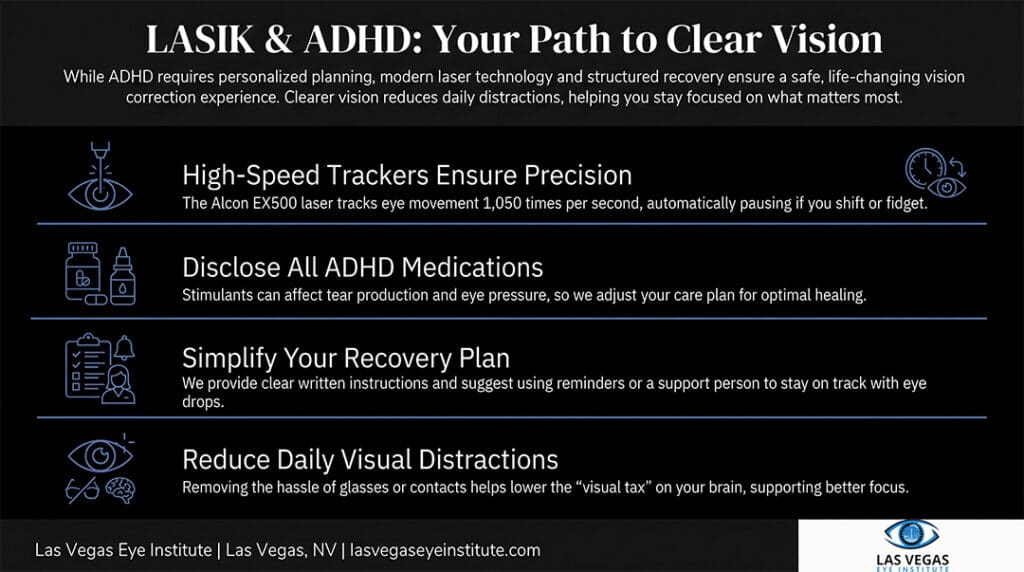
Many people in the United States take medications like Adderall, Vyvanse, Ritalin, or Concerta to manage ADHD, and these can sometimes affect the eyes. Stimulants may cause dryness, blurred vision, or eye strain, which can add to the temporary dryness that LASIK can cause during recovery. Some drugs also raise the chance of narrow-angle or angle-closure glaucoma, which is why Dr. Swanic carefully checks the eye’s pressure and structure before surgery. Sharing every medication with your surgeon is key so the care plan can be adjusted safely. This step helps prevent complications and gives patients the best chance for smooth healing.
What role does post-operative care play for patients with ADHD?
The recovery period after laser surgery is very important, and patients with ADHD may need extra reminders to stay on track. Things like remembering eye drops, avoiding rubbing the eyes, and showing up for follow-up visits are critical to healing. Because impulsivity and attention challenges can get in the way, Dr. Swanic often suggests written instructions or involving a family member for support. Simple adjustments like these make it easier to follow through with the care plan. With the right structure, patients lower the risk of dry eye disease, infection, or delayed healing.
Can ADHD affect vision directly?
ADHD itself doesn’t cause visual impairment, but studies show that certain vision conditions happen more often in this group. Convergence insufficiency, strabismus, or vergence problems can cause headaches, double vision, or trouble with reading and everyday life tasks. Vision therapy, prism glasses, or other treatments can help improve visual perception in these cases. LASIK corrects refractive error like astigmatism or farsightedness but won’t change the core signs and symptoms of ADHD. Still, by reducing the hassle of glasses or corrective lens wear, many patients find it easier to focus on school, work, or other responsibilities.
Take the next step.
Schedule your complimentary consultation today.
How do stimulant medications interact with LASIK recovery?
Stimulants can make dry eye worse, which matters because LASIK temporarily reduces tear production as well. Evidence shows that drugs like methylphenidate and amphetamines lower tear stability, which may slow down healing. The Food and Drug Administration has noted ocular side effects from stimulants, so Dr. Swanic takes these into account when planning surgery. Pre-op testing for dryness, tear quality, and overall eye health helps guide safe treatment. Sometimes, adjustments in medical prescription timing are discussed with the psychiatry team to limit side effects and improve comfort during recovery.
What happens if a patient moves during LASIK surgery?
Many patients with ADHD worry about moving or fidgeting during surgery, but modern LASIK technology makes this a non-issue. Every laser is different with older lasers, like the Visx Star S4, using a tracker that tracks the eye 60 times per second which is generally adequate because the laser only has a repetition rate of 20 times per second. The Alcon EX500 laser used at LAs Vegas Eye Institute instead tracks the human eye 1050 times per second because it has a firing rate of 500 times per second. Either of these lasers and pauses automatically if the eye moves significantly out of place. A device gently holds the eyelids open, and numbing drops prevent blinking. If anxiety is high, a mild sedative can calm the brain and body so the experience feels easier. Thanks to these safeguards and Dr. Swanic’s skill, restlessness does not interfere with surgery results.
Why is it important to disclose an ADHD diagnosis before surgery?
Letting the surgical team know about ADHD makes the entire process safer. Disclosure helps Dr. Swanic and his team at Las Vegas Eye Institute set up extra reminders, clear written instructions, and closer follow-up when needed. It also matters because ADHD medications can affect tear production, eye pressure, and even the retina. By knowing this in advance, the physician can make small changes to the plan that protect the patient’s health and recovery. Open conversation ensures the best outcome and a smoother overall experience.
What mental and physical preparations help ADHD patients succeed with LASIK?
Being mentally ready is just as important as the physical steps. Learning about the procedure, asking questions, and talking through any anxiety with Dr. Swanic can make a big difference. Some patients practice calming techniques like deep breathing or listening to music to keep the mind steady. Physically, patients should stop wearing contacts before surgery, avoid makeup on the day of, and arrange a ride home since driving isn’t safe right away. Simple preparation like this sets the stage for less stress, a safer surgery, and faster recovery.
What unique benefits can LASIK offer for ADHD patients?
LASIK doesn’t treat ADHD itself, but it can remove daily frustrations tied to vision. Relying less on glasses or contact lens wear often makes reading, driving, and work easier, while clearer vision supports smoother visual perception. For those with refractive error such as astigmatism or farsightedness, correcting the problem can ease strain on the brain and reduce distractions caused by blurry vision. Better visual acuity can also support executive functions by making everyday life tasks simpler. For many patients, the result is more freedom and confidence.
How does Dr. Swanic ensure safe outcomes for ADHD patients undergoing LASIK?
Dr. Swanic uses advanced ophthalmology technology along with a personalized approach to care. Every patient gets a full exam to rule out glaucoma, dry eye disease, or strabismus that could raise risk. During the procedure, the laser’s motion-tracking keeps treatment precise, while after surgery, the team focuses on simple instructions and good communication. When needed, coordination with psychiatry or medicine providers ensures nothing is overlooked. This attention to detail helps ADHD patients feel supported and achieve lasting results from their surgery.
Take the Next Step Toward Clear Vision
Having ADHD doesn’t mean LASIK is off the table—it just means a little more planning is involved. With Dr. Swanic’s experience, modern laser technology, and careful attention to medication side effects, most patients do very well. Clear vision reduces the need for glasses and contact lens wear, making everyday life less complicated. If you’ve been considering laser eye surgery, now is the time to explore whether it’s right for you. Schedule a consultation with Las Vegas Eye Institute today and start your journey to better vision.
Medically Reviewed By:
Matthew Swanic, MD
Board-Certified Ophthalmologist
Fellowship-Trained Refractive Surgeon, WCRS
Last reviewed September 15, 2026