
Cataracts don’t just affect your vision—they can also impact your overall well-being. Many patients experience increased frustration, isolation, and even symptoms of anxiety or depression as their vision declines. At Las Vegas Eye Institute, Dr. Swanic and his team understand that cataract surgery is about more than restoring eyesight—it’s about improving quality of life. Research is now shedding light on the mental health benefits that come with clearer vision. Schedule a consultation with Las Vegas Eye Institute to find out if cataract surgery is the right step for you.
How are anxiety and depression connected to cataracts?
Patients with cataracts often experience anxiety and depression as their vision deteriorates. At Las Vegas Eye Institute, Dr. Swanic regularly sees patients whose vision loss leads to frustration, social withdrawal, and reduced independence—factors that contribute to poor mental health. Research confirms this connection, showing higher rates of anxiety and depressive symptoms in individuals with visual impairment from cataracts. A 2024 study in BMC Psychology found that symptoms such as “uncontrollable worry” and “depressed or sad mood” were central in cataract patients, reinforcing the need to address mental health during cataract treatment. These findings are part of a broader effort in ophthalmology to understand how vision loss influences mental health.
What does research say about the impact of cataract surgery on mental health?
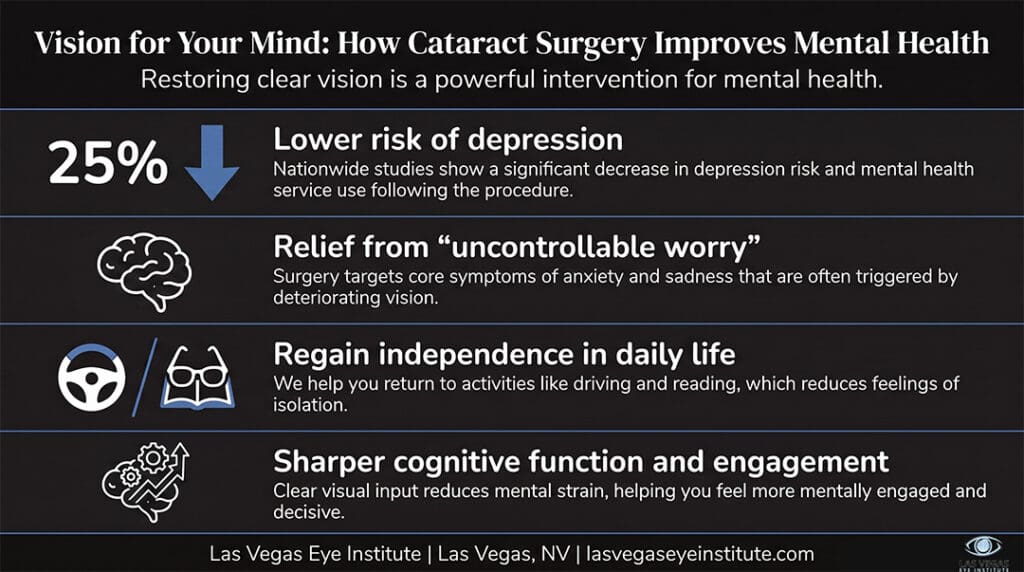
Cataract surgery has been associated with a significant reduction in symptoms of anxiety and depression. A nationwide cohort study reported a 25% decrease in depression risk for those who underwent the procedure, and other population-based studies found reductions in mental health service use after surgery. At Las Vegas Eye Institute, many patients report noticeable improvements in mood and emotional well-being after regaining visual clarity. Restoring sight helps eliminate the psychological burden caused by struggling to function in everyday life. This benefit was supported by a large-scale experiment that analyzed symptom networks among over 1,200 cataract patients and found specific mental health patterns related to vision impairment.
Why does restoring vision help improve mental health?
Improved vision reduces disability and increases a patient’s ability to engage in daily tasks, boosting self-confidence and reducing feelings of isolation. After cataract surgery, patients at Las Vegas Eye Institute often express relief at being able to drive, read, or recognize faces again—activities that restore a sense of normalcy and independence. This enhanced visual perception improves overall quality of life and reduces the emotional stress linked to visual impairment. The presence of cataracts acts as a key environmental factor contributing to anxiety and depression, and removing that barrier often improves mental well-being significantly.
Which symptoms are most important to address in cataract patients with anxiety or depression?
The most influential symptoms identified in recent research include “uncontrollable worry” and “depressed or sad mood.” These symptoms had the highest expected influence in the network analysis of over 1,200 cataract patients. For Dr. Swanic’s patients, addressing these symptoms early—often through a combination of clinical education, support, and timely surgery—can significantly reduce mental strain and improve both vision and emotional outcomes.
Are there specific symptom connections that matter most?
Yes, certain symptoms act as bridges between anxiety and depression. The study found that “afraid something will happen” and “concentration difficulties” connected both mental disorders, which increases the risk of comorbidity. Patients at Las Vegas Eye Institute who report these feelings often benefit from both surgical and therapeutic interventions. Identifying these warning signs early allows for targeted therapy that supports better mental health outcomes before and after cataract surgery.
Can untreated mental health symptoms impact surgical outcomes?
Yes, preoperative anxiety or depression can negatively influence recovery and treatment adherence. Dr. Swanic emphasizes the importance of addressing mental health as part of comprehensive cataract care. Unmanaged mood disorders may lead to missed follow-up appointments or complications due to reduced compliance with post-operative instructions. For patients with diabetes or glaucoma, who are already managing complex eye diseases, untreated anxiety or depression can further increase the risk of poor outcomes.
Experience the LVEI Difference.
Experience friendly, unrushed, personalized treatment from Dr. Matthew Swanic.
How does cognitive function improve after cataract surgery?
Cataract surgery has been linked not only to improved vision but also to better cognitive function in older adults. At Las Vegas Eye Institute, Dr. Swanic often hears from patients who feel mentally sharper and more engaged after their procedure. Restoring clear visual input helps reduce mental strain caused by trying to interpret blurry images or navigate environments with poor depth perception. Research has shown that visual impairment is associated with an increased risk of cognitive decline, and cataract surgery may help delay or mitigate this process. Improved cognitive clarity contributes to better mood, decision-making, and independence—key elements of overall mental health.
How does cataract surgery compare to other mental health treatments?
Cataract surgery is not a replacement for therapy or psychiatric treatment, but it can play a powerful role in improving mood and reducing emotional distress caused by visual impairment. Vision restoration enhances quality of life, improves social engagement, and reduces disability—all factors that support better mental health. Patients with more complex mood disorders may still need counseling or medication, but surgery can remove a major environmental factor contributing to their condition.
What does this mean for older adults facing cataracts?
In older adults, vision loss from cataracts can exacerbate existing health problems and lead to increased disability, depression, and anxiety. Cataract surgery offers a reliable solution that restores vision and improves daily functioning. Dr. Swanic and the team at Las Vegas Eye Institute encourage older patients and their families to view surgery not just as a medical procedure, but as an important step toward regaining quality of life and independence.
What should patients do next?
If you or someone you love is struggling with cataracts and also experiencing symptoms of anxiety or depression, it may be time to explore whether cataract surgery could help. At Las Vegas Eye Institute, Dr. Swanic, an experienced refractive surgeon, provides personalized care that considers both your vision and your overall well-being. Schedule a consultation today to take the first step toward clearer sight and a healthier state of mind.
Sources:
Zhang Q, Wen F, Li B. Anxiety and depression in Chinese cataract patients: a network analysis. BMC Psychology. 2024;12:709. https://bmcpsychology.biomedcentral.com/articles/10.1186/s40359-024-01640-w
Medscape: Cataract Surgery May Help Prevent Falls and Fractures. https://www.medscape.com/viewarticle/cataract-surgery-may-help-prevent-falls-and-fractures-2025a10007cn
PMC: https://www.ncbi.nlm.nih.gov/pmc/articles/PMC7987466/
Medically Reviewed By:
Matthew Swanic, MD
Board-Certified Ophthalmologist
Fellowship-Trained Refractive Surgeon, WCRS
Last reviewed September 9, 2026